02 / PERSONAL PROJECT
Recruiter Decision Copilot
A recruitment workspace for clearer role requirements, sourcing hypotheses and candidate evidence. It supports human judgement; it does not make hiring decisions for people.

Better evidence.
Human decisions.
The problem
A job title is not a complete hiring brief. Before reviewing candidates, a recruiter needs to clarify the actual work, distinguish essential requirements from preferences and decide what would count as relevant evidence.
My recruitment background shaped this project: make those assumptions visible and give the reviewer a more structured starting point.
Support the recruiter. Keep the decision human.
Recruiter Decision Copilot is designed to help people organise, compare and question evidence—not to decide whom to hire or reject.
The interface makes this explicit: “Human-led by design. No automatic rejection or hidden scoring.” Recruiters define and edit the criteria, validate sourcing assumptions, review candidate evidence and retain responsibility for decisions.
01 / ROLE BRIEF
Start with the work.
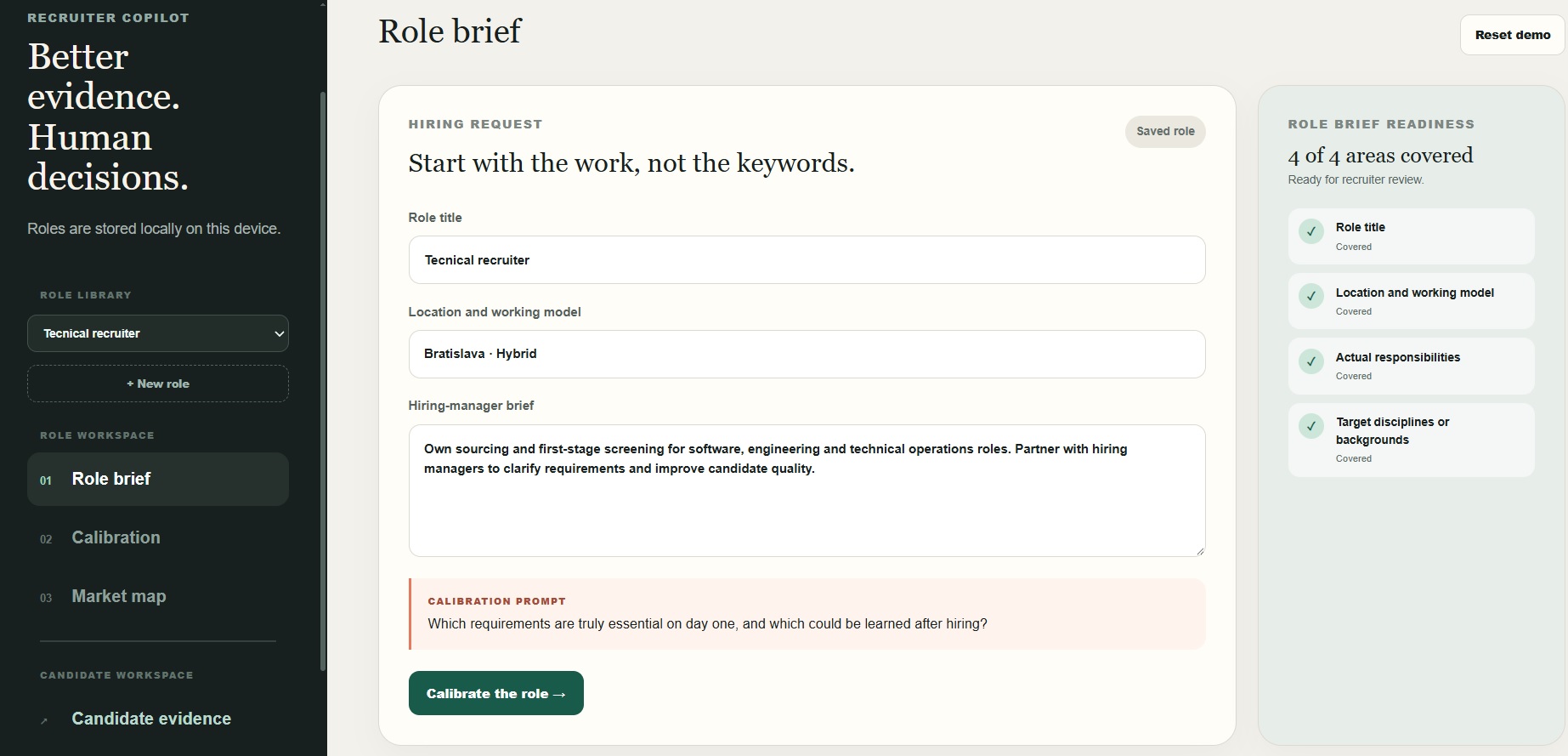
The role brief captures the responsibilities, location and working model before the recruiter defines what evidence matters. A readiness check highlights whether the four brief areas are covered.
02 / CALIBRATION
Make the criteria explicit.
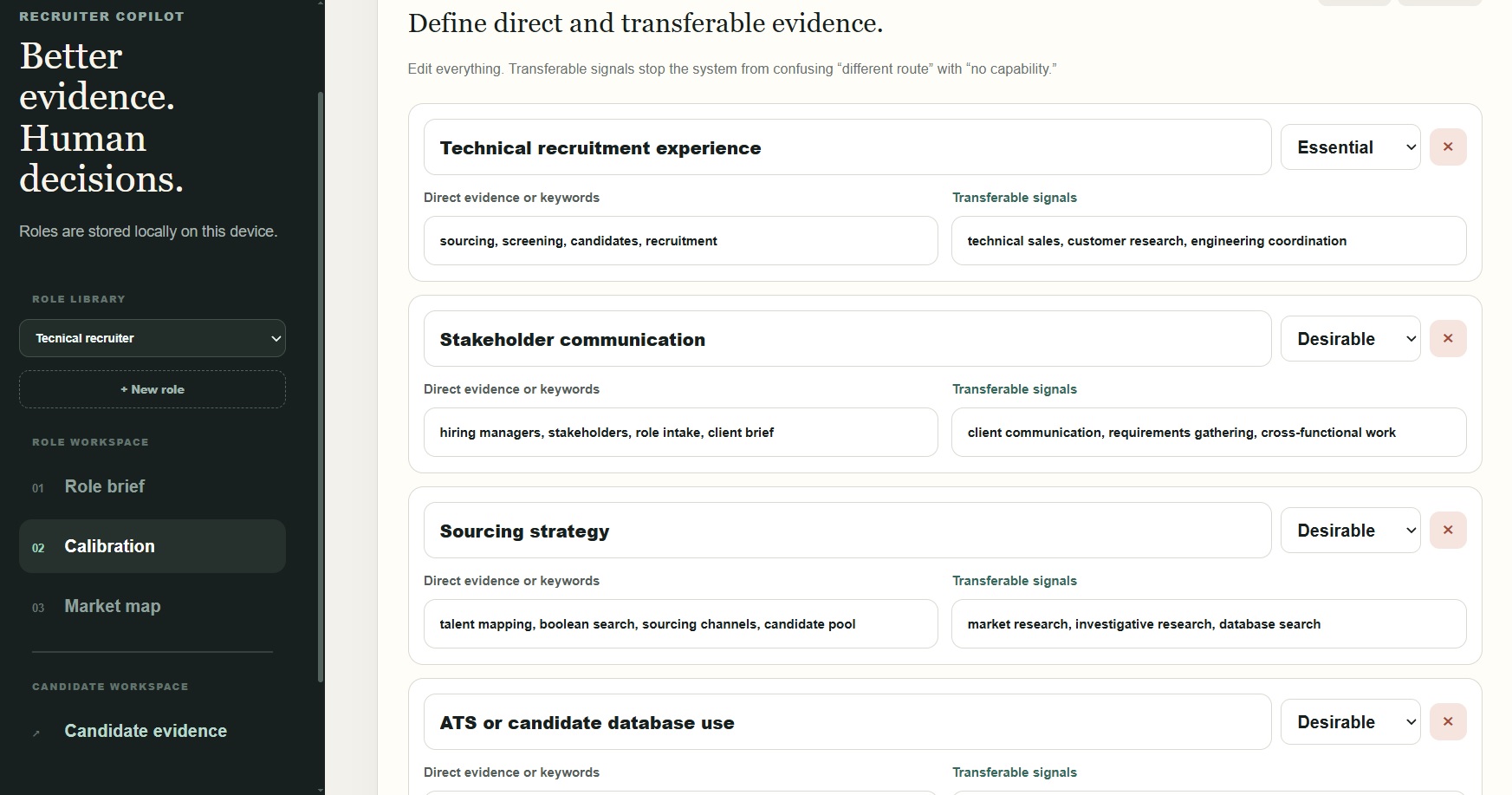
The recruiter can edit criteria, mark them essential or desirable, and define direct evidence alongside transferable signals. This creates room to examine relevant experience gained through a different career route.
03 / MARKET MAP
Build a hypothesis worth checking.
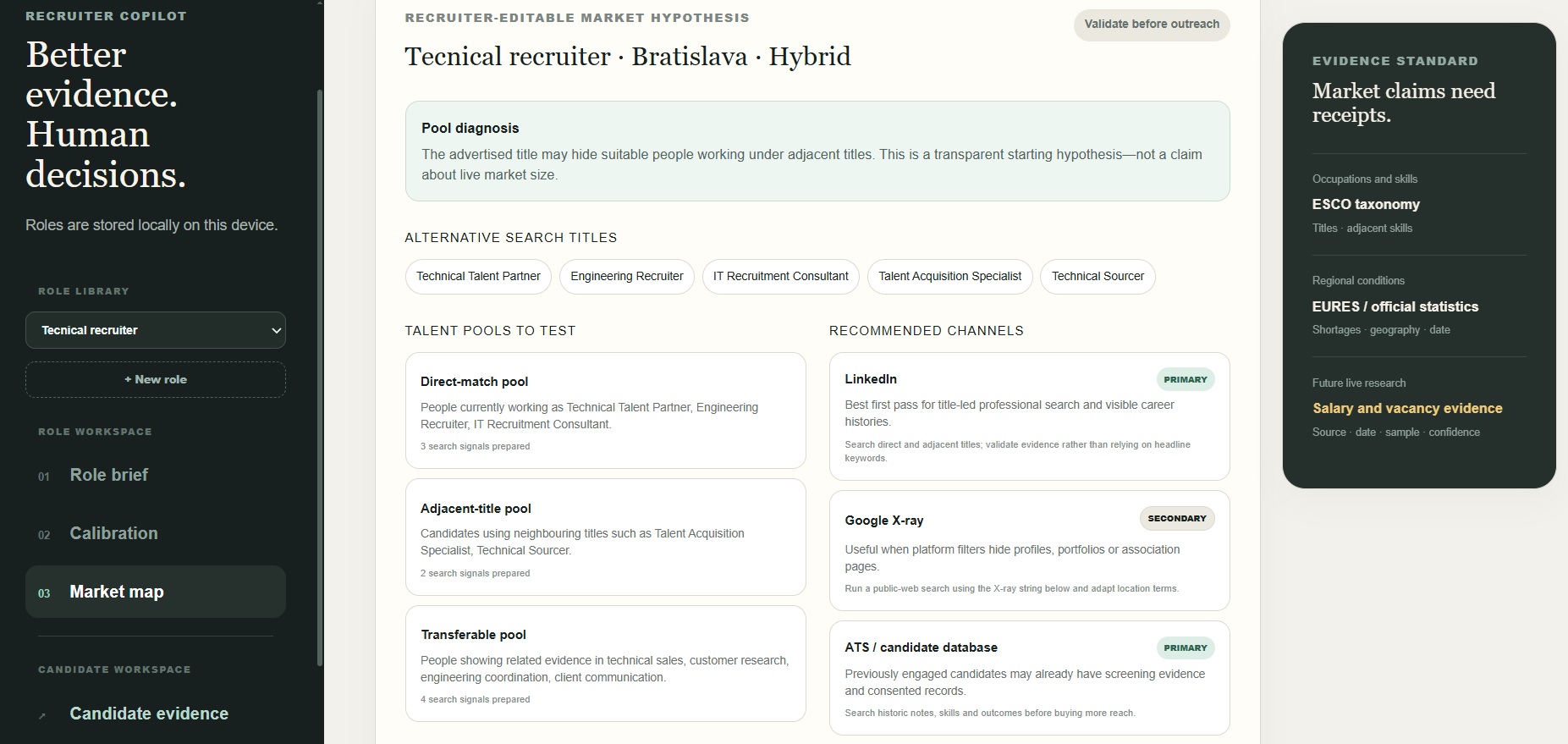
The market map lays out alternative job titles, potential talent pools and search channels. It explicitly labels the result as a recruiter-editable hypothesis that needs validation before outreach.
04 / SEARCH PREPARATION
Turn the plan into a starting search.
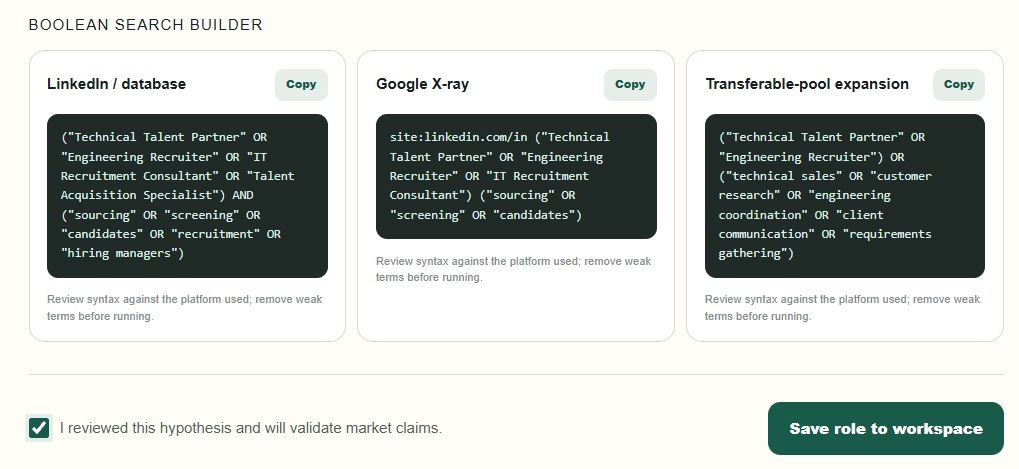
The Boolean search builder supplies editable starting points for LinkedIn or databases, Google X-ray and a broader transferable-skills pool. The workflow asks the recruiter to review the hypothesis and validate market claims before saving it.
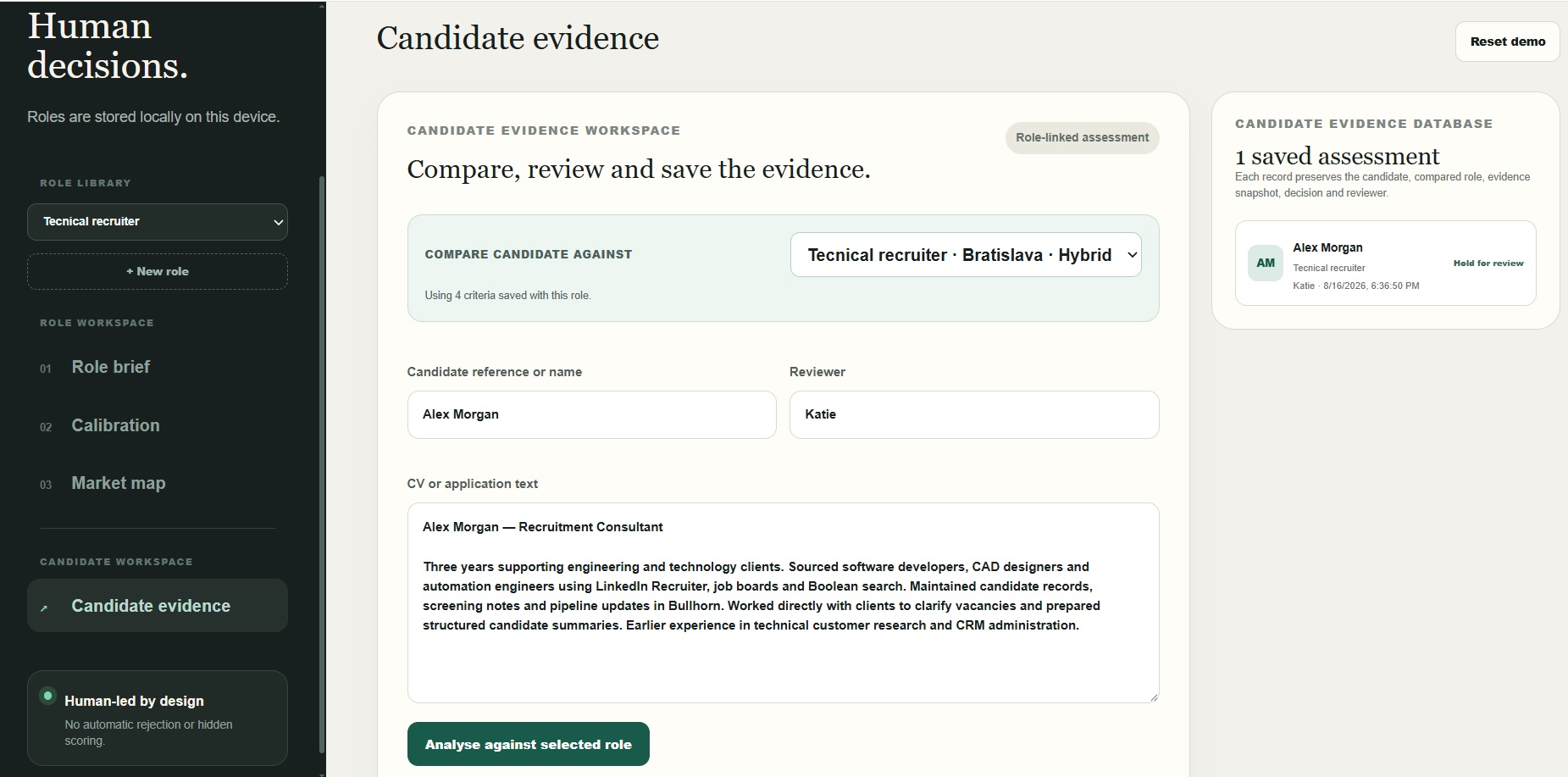
05 / CANDIDATE EVIDENCE
Keep the evidence tied to the role—and the reviewer.
The candidate workspace links supplied CV or application text to a selected role and its saved criteria. The screenshot also shows a saved assessment labelled “Hold for review,” with a named reviewer.
Make the reasoning open to review.
The important design choices are the editable criteria, the separation of direct and transferable evidence, the explicit uncertainty in the market map, and the reviewer attached to a saved assessment.
They give a person places to challenge an assumption, ask for missing information and record their judgement. A different career route should prompt an evidence check, not an automatic dismissal.
Scope and limits
This case study presents the prototype workflow shown in the screenshots. It does not claim validated assessment accuracy, live market intelligence or improved hiring outcomes. Human review remains necessary; editable criteria and visible evidence do not by themselves guarantee a fair or correct decision.
The public page shows the interface and design reasoning. It does not include the application’s source code or private implementation details.