











KATIE HORNIAKOVA

A JOURNEY THROUGH SYSTEMS

SCROLL TO BEGIN ↓

My career journey may have been a little unconventional, but in the best possible way, giving me a perspective that is hard to get from theory alone.

It started with people. I studied social and work psychology with a focus on HR and then, unexpectedly, I spent eight years inside a precision technical workplace, working as part of a team where quality, communication, coordination, planning, and attention to detail mattered every day.

That gave me something difficult to replicate from the outside: a practical understanding of how technical workplaces actually function, how people depend on clear processes and communication, and how much the human side affects the quality of the work itself.

Seeing the technical part of my journey not as a detour, but as context, I want to bring these worlds together again: people, practical systems, and modern tools like AI.

01

HUMAN SYSTEMS

The journey began with people.

Since I was always drawn to understanding people, their motivations, and what makes them work well together, I decided to study social and work psychology with a focus on HR.

I don’t see human systems as abstract. For me, they are the everyday reality of work: how people communicate, how roles are understood, how expectations are set, and how much the right environment can affect confidence, performance, and belonging.

PEOPLE, WORK & COMMUNICATION

My background includes graduate-level studies in social and work psychology with a focus on HR management, recruitment, and workplace behaviour.

In my early professional roles, I supported recruitment processes, communicated with candidates, conducted interviews, worked with internal databases, and helped translate technical role requirements into clearer, more accessible language.

This gave me a practical foundation in candidate communication, role understanding, motivation, and the importance of clear, nuanced communication in people-focused work.

02

TECHNICAL WORKPLACE EXPERIENCE

My journey then moved into a completely different kind of system: a precision technical workplace.

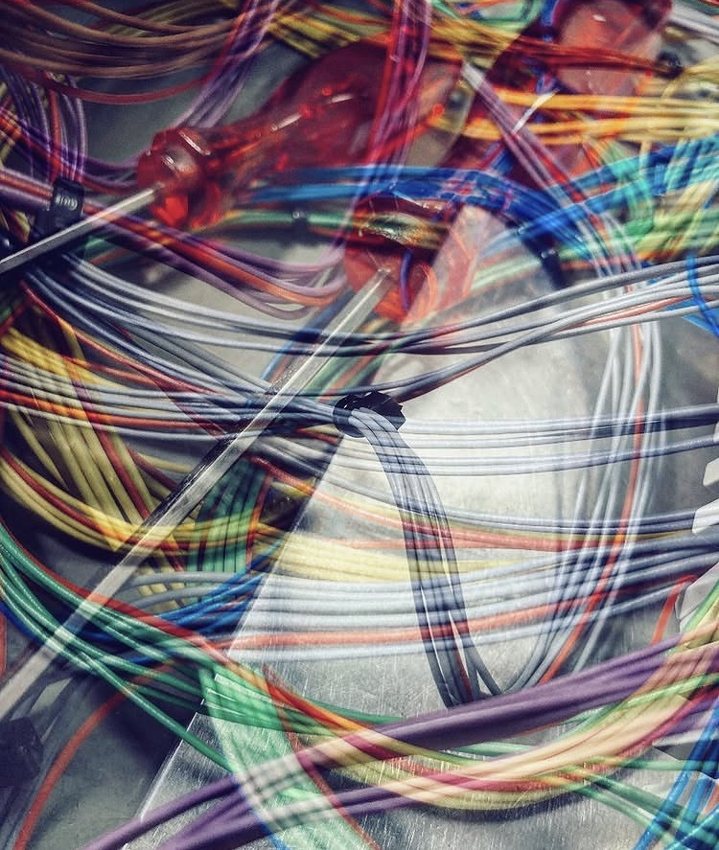
For eight years, I worked as a laser module technician in the entertainment and art industry, assembling and testing high-precision laser systems used around the world.

My role was technical, detailed, and completely unfamiliar at the beginning, but it became one of the strongest examples of my ability to learn, adapt, work carefully, and understand how technical teams function from the inside.

PRECISION, QUALITY & PROCESS

My work involved assembling and testing laser modules, working with fine optics, mechanical components, technical documentation, troubleshooting, safety procedures, and detail-oriented production processes.

I learned the role from scratch and became independent in an environment where quality, consistency, and reliability mattered every day.

This experience gave me practical insight into how communication, planning, documentation, materials, processes, and team support affect both the quality of the work and the people doing it.

03

SEEING THE PATTERNS

Over time, the two sides of my journey started to connect.

Whether I was working with people, roles, communication, or technical processes, I kept noticing the same thing: good work depends on clear systems.

People need clarity. Technical teams need clarity. Processes, expectations, documentation, communication, and support all shape whether work feels confusing and stressful, or structured and possible.

That is where my interest in practical systems, people operations, and AI-supported workflows started to make more sense.

04

AI AS A PRACTICAL TOOL

AI became interesting to me not as a replacement for people, but as a practical tool for clarity.

I use AI tools to organise messy ideas, improve writing, compare information, structure workflows, create checklists, prepare documents, and think through problems more clearly.

What interests me most is how AI can support everyday HR, recruitment, and workplace operations: clearer communication, better documentation, more structured onboarding, smarter templates, and less repetitive mental load.

For me, the goal is not to remove the human part. It is to strengthen it.

PRACTICAL AI WORKFLOW THINKING

I am currently exploring small, practical ways AI can improve people-focused work.

This includes AI-supported recruitment materials, onboarding checklists, candidate communication templates, HR document simplification, and simple workflow tools that help turn scattered information into something clearer and easier to use.

I am especially interested in using AI with judgement: not blindly automating decisions, but supporting better structure, communication, and consistency in the parts of work where people often feel overwhelmed or unclear.

05

WHERE I’M HEADING NEXT

I want to work where people, roles, and workplace systems meet.

I am especially drawn to HR, recruitment, people operations, workplace experience, and roles where clear communication, organisation, empathy, and practical problem-solving matter.

My goal is to bring together the parts of my background that now make sense as one story: psychology, recruitment, technical workplace experience, and modern tools like AI.

I’m not starting over. I’m returning to people-focused work with a deeper understanding of how technical workplaces actually function, and with a strong interest in helping work feel clearer, better organised, and more human.