01 / PERSONAL PROJECT
CareerOS
A Chrome side-panel extension that brings job details, fit evidence, AI advice and your own decisions into one workflow.

Read the role.
Keep the reasoning.
The problem
Job searching spreads information across vacancy pages, AI conversations and personal notes. A recommendation is less useful when its reasoning gets lost—or when it is mistaken for a decision already made.
I wanted a workflow that keeps the advert, the evidence and my own judgement connected.
The workflow
CareerOS opens beside a vacancy in Chrome. It reads the job details and produces a local fit snapshot, with separate areas for direct evidence, transferable evidence, likely gaps and manual checks.
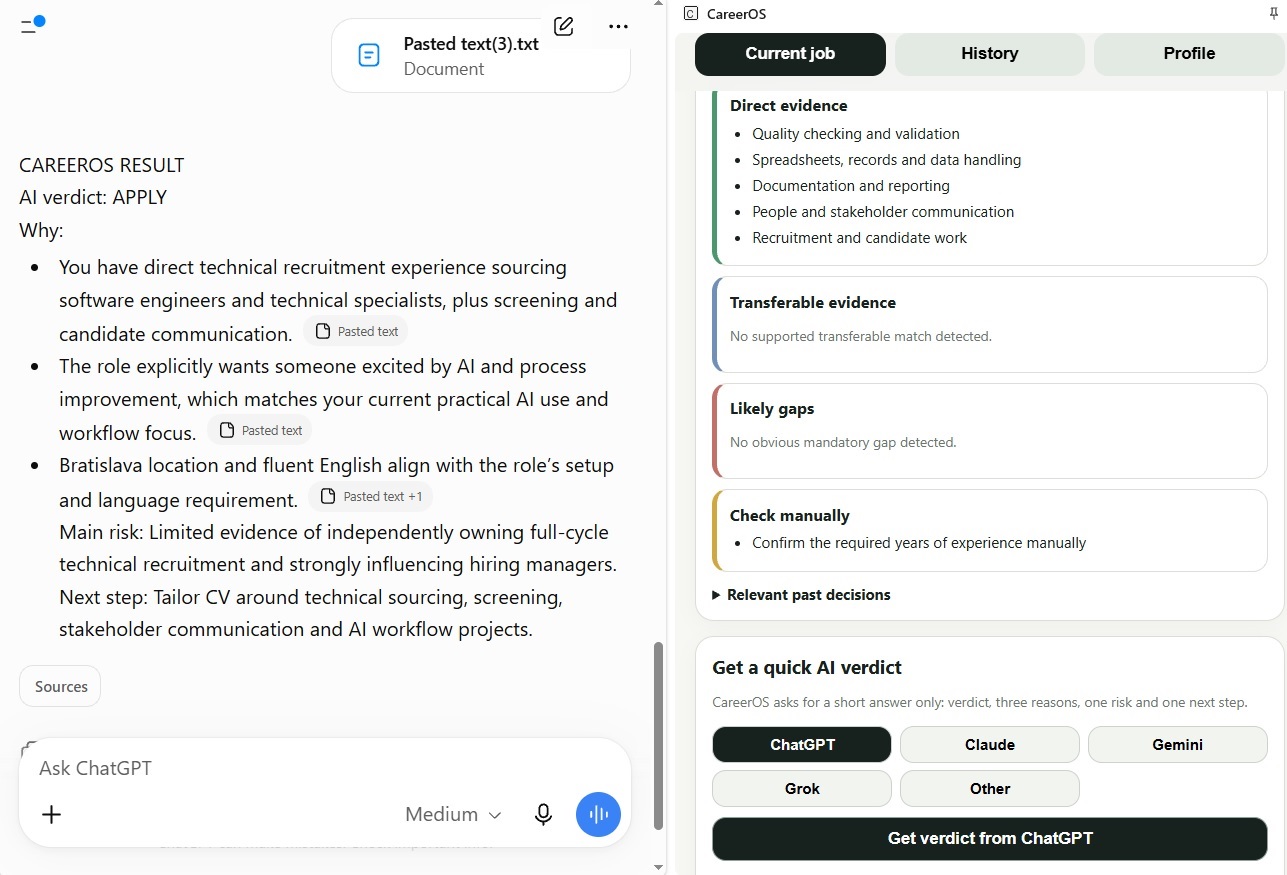
For a second perspective, it prepares a prompt for the user’s chosen AI conversation. The user sends the prompt and brings the short response back into CareerOS. The AI recommendation and the user’s final decision remain separate.
01 / READ THE VACANCY
Keep the source in sight.
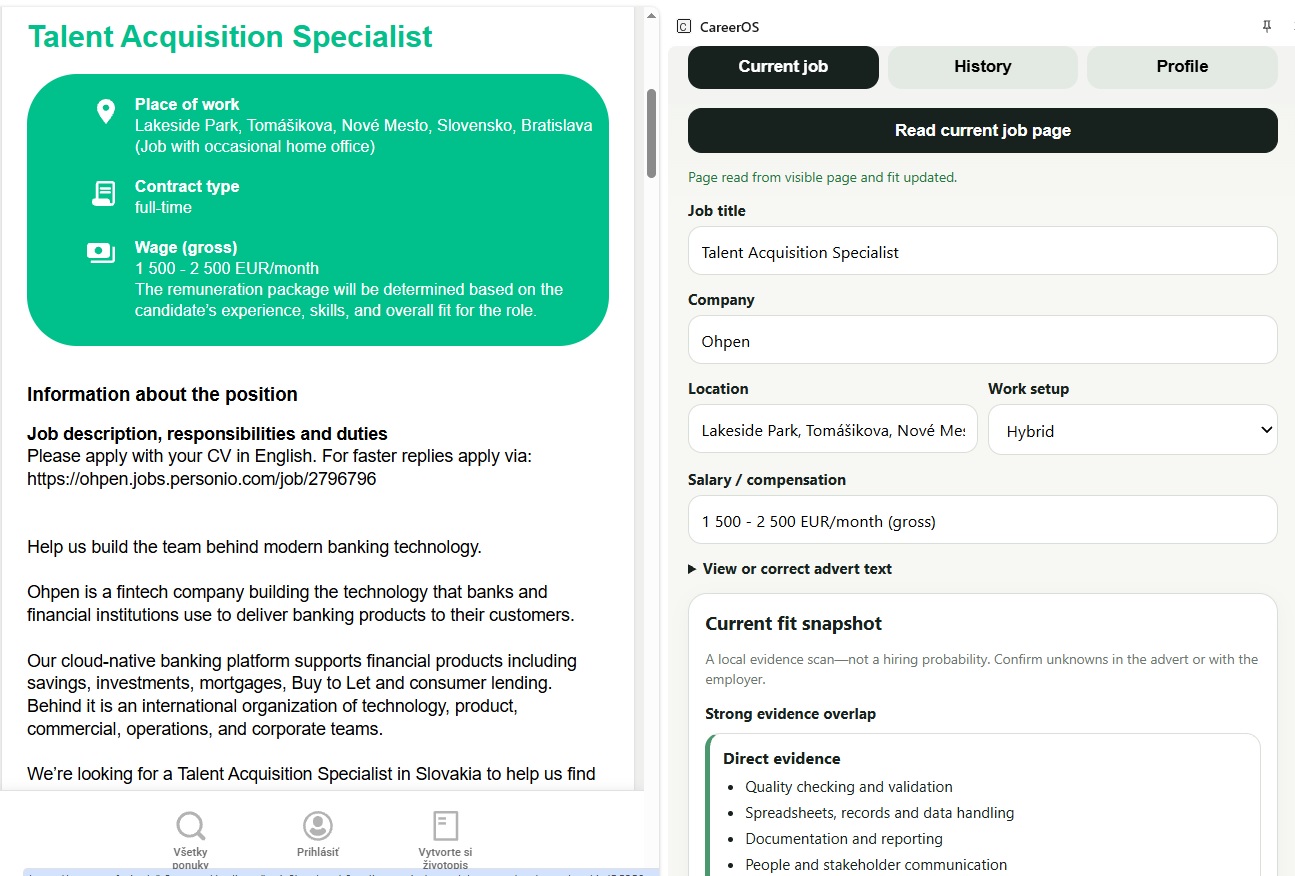
The side panel sits alongside the original advert, so extracted information can be checked and corrected before it informs a decision.
02 / REVIEW THE EVIDENCE
A second opinion. A separate judgement.
The local snapshot and the external AI response are different steps. Here, ChatGPT recommends applying and supplies reasons, a main risk and a next step. CareerOS keeps the manual checks visible.
03 / KEEP THE DECISION
Remember what you decided—and why.
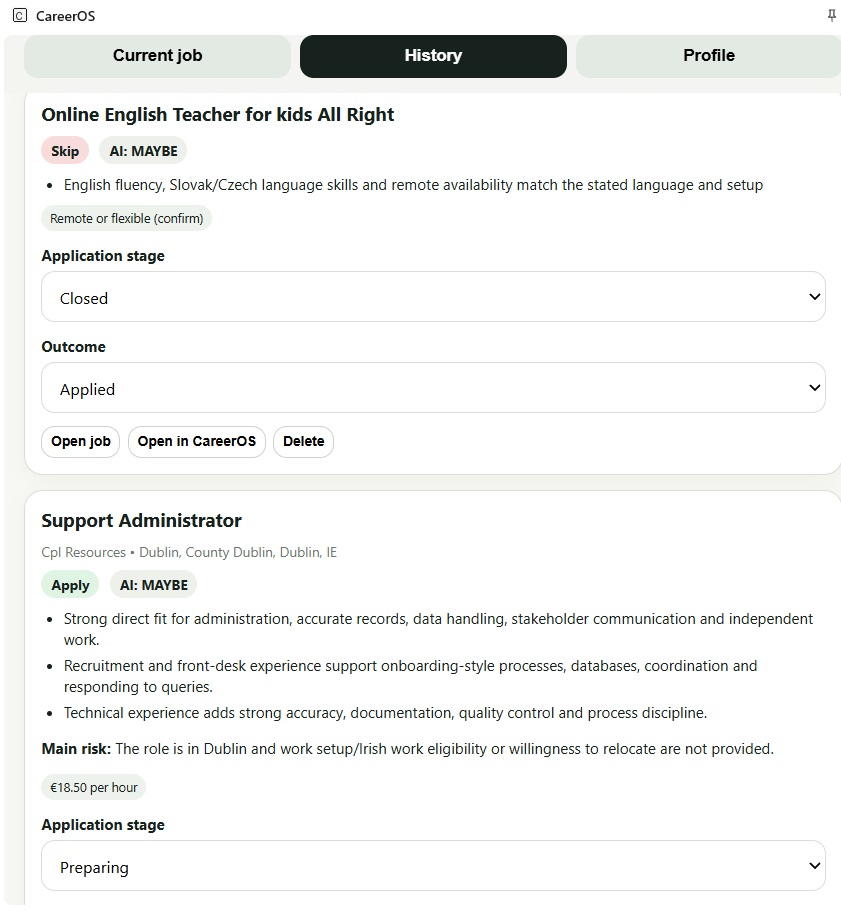
History stores the user’s decision separately from the AI recommendation, alongside reasons and application progress. In the Support Administrator example below, the user chose Apply while the AI recommendation was Maybe.
The screenshot exposed the bug.
During portfolio preparation, the original reader missed the company and salary even though they were visible on the page. It also described occasional home office too broadly as “Remote or flexible.”
The reader was updated to include the facts panel above the description, recognise more salary formats and distinguish occasional home office from fully remote work.
The revised reader passed 26 browser-fixture tests. I then checked the vacancy again in Chrome: the first screenshot shows the corrected fields.
What I learned
A convincing AI response cannot make up for incomplete input. Checking the extracted facts against the source is a necessary part of the workflow, not an optional finishing touch.
Scope and limits
CareerOS is a personal prototype. Page layouts vary, extracted fields remain editable, and the fit snapshot is not a probability of being hired. This case study demonstrates the workflow and a concrete iteration; it does not claim measured job-search or hiring results.
These are screenshots of the working interface. The extension’s source code, private prompts and underlying profile documents are not included.